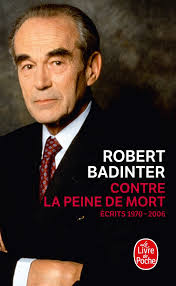
The October 9th 2021, France was celebrating the 40th anniversary of death sentence’s abolition. Indeed, it was the October 9th 1981 that the French President François Mitterrand abolished the death penalty after his minister of justice’s speech, Robert Batinder.
I wanted to tell you about this morbid topicfor some reasons. Actually, it seems interesting to me to talk about a news topic that can refered of my last article on the movie The Green Line.
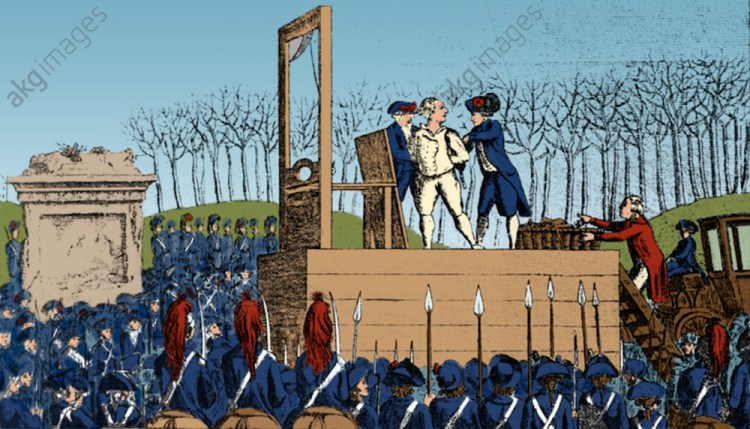
Regarding to France, guillotine is very famous from the French Revolution. A quick story about it: did you know that the French King Louis XVI had improved the guillotine? And it was the same king that was executed later during the French Revolution , quite ironic doesn’t it? Guillotine became the official execution instrument since the April 25th 1792 until the last condamned man the September 10th 1977. And it was in 1981 that the Batinder’s speech was done and that we could resume by his quote: « In truth, the death penalty doesn’t protect the society of free women and free men, it disgraces it. Thereby, we must always and every where refuse that death became the law coveryd by justice. »
I cann’t cover all the death penatlty’s history in all countries. However, we can notice that there were around thrity countries in 1981 that abolished absolutely the death sentence and there are currently around 105 countries which signed up.

Before to see what’s next, take a glimpse on the world:
- complete abolition: it is most respected in Europe, Canada, Autralia, some Africa’s countries and also many countries in Central America and South America.
- abolition de facto (meaning, there were no execution the last decade): we find Russia and some countries in Africa, mostly located in the north-west of Africa.
- almost complete abolition bar exceptionnal cases: Chile, Peru, Brazil, Suriname and Kazakhstan.
- and those which still using death penalty: the United Stated, most of Asia’s countries (China, India,..) and some part of Africa (Egypt, Somalia,…)

If states don’t share the same mind on this matter, it is the same for the way of execution. We already talk about the well-known guillotine but there is also the old ways as hanging or firing squad, and not forget to mention the ones which we heard about as electric chair or lethal injection.
On the occasion of the 40th anniversary, journalists collected some testimony of people who were inderectly faced with death penalty. They were laywers, guardians or jury members. They lived throught this in different point of view. A laywer was thankful that none of his client was condemned to death but feared every time that was the verdict. A jury member was very shocked to be applaused, with all jury members, to vote the death sentence in court. To her, it doesn’t matter if the man was guilty or innocent, be responsible for the life of an humain being take a lot.
Back to Robert Batinder. Currently, he is the francophone spokesperson of International Commision against the Death penalty. This institution shows its argument by resolve old cases and proving that the condamned person was innocent. This people was sentenced to death and years later, it was proving they were not guilty. They ascertained that this kind of justice’s miscarriage are numerous and that we can determine in the United State that one out of seven condamned men is not guilty. To put an exemple, you can take a look at the Troy Davis’ case or Carlos De Luna’s case.
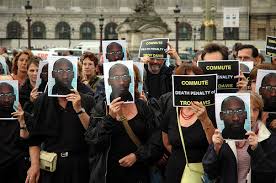
At the end, pro or against death penalty’s debate is not close yet. However, this fight puts in headlights that there are numerous issues with justice’s cases and the fact death is not a real matter to us until we face it.
 Chapeau Rouge et Livres en bottes